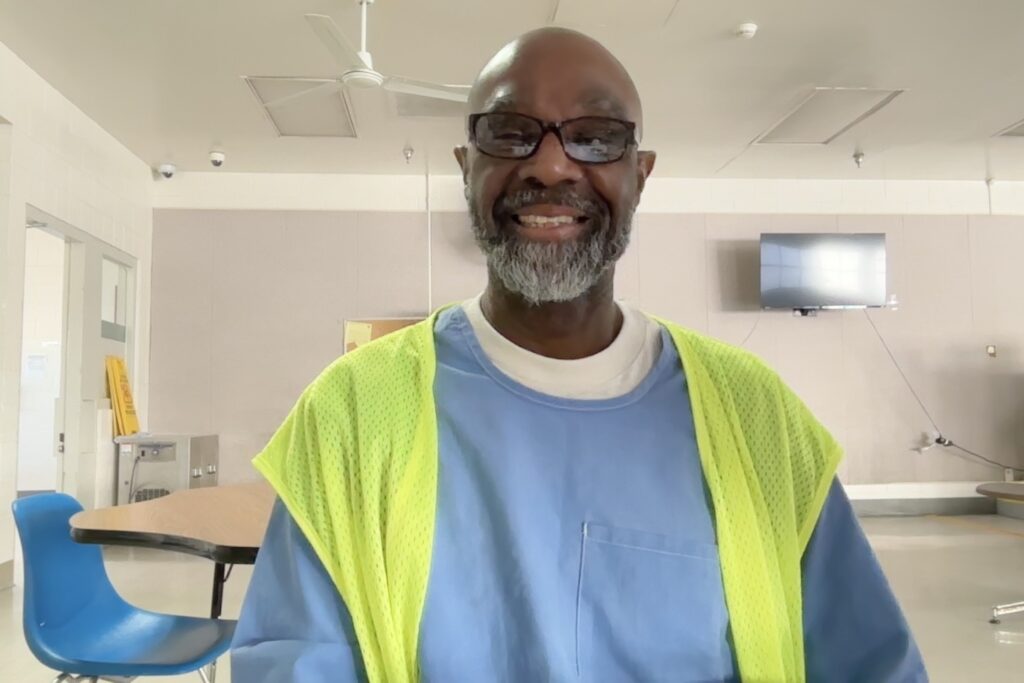
Guy Miles spent more than 18 years in prison for a robbery he did not commit. Last week, the Orange County District Attorney’s Conviction Integrity Unit agreed he never should have been convicted in the first place, vacating his Dark Plea and closing a case that took nearly three decades to make right.
We’re grateful the CIU took a second look, and we’ve said so publicly. But Guy’s case isn’t just a story about one wrongful conviction getting corrected. It’s a case study in two problems that are still baked into California’s criminal justice system today, problems that will keep producing more Guy Miles cases unless they’re fixed.
The Dark Plea
In 2018, the Court of Appeal vacated Guy’s conviction after new exculpatory evidence came to light: confessions from three of his co-defendants, made after the statute of limitations had run, all stating Guy had no involvement in the robbery. The court found that evidence likely would have changed the outcome at trial. That should have been the end of it. Instead, the Orange County District Attorney’s Office at the time indicated it would retry Guy and seek the same sentence he’d already served nearly two decades under: 75 years to life.
Guy had already spent 18 years fighting to prove his innocence. Now he faced a choice: keep fighting, and risk dying in prison if he lost, or plead guilty to a crime he didn’t commit and go home to his family that same day.
He chose to go home.
This is what’s known in the innocence community as a “Dark Plea,” a guilty plea entered not because someone did the crime, but because the alternative is too dangerous to risk. It’s a well-documented pattern nationally: a person’s conviction is overturned, prosecutors threaten a retrial with a harsh potential sentence, and the exonerated person is coerced into pleading guilty just to end the ordeal. The plea isn’t evidence of guilt. It’s evidence of how much power a prosecutor holds over someone who has already proven their conviction was flawed.
We don’t think the answer is eliminating plea deals after a reversal entirely. Sometimes a plea is genuinely the right choice for someone weighing their options. But right now, that choice is made in the dark, with no requirement that anyone acknowledge what’s actually happening. We believe any plea offered to a person whose conviction was just reversed, where that person maintains their innocence, should require an on-the-record acknowledgment of the trade-off being made: that the person is pleading guilty specifically because of the threatened alternative, not because they did it. That doesn’t take away anyone’s choice. It just makes the coercion visible instead of buried in paperwork, so at least the record reflects what really happened.
Eyewitness Misidentification
Guy’s conviction rested heavily on eyewitness testimony that turned out to be wrong. He’s far from alone. Nationally, mistaken eyewitness identification has played a role in a large majority of convictions later overturned by DNA evidence.
California took a real step forward in 2018 with SB 923, which added Penal Code section 859.7 and, starting in 2020, required law enforcement statewide to follow evidence-based practices for lineups: double-blind administration, so the officer running the lineup doesn’t know who the suspect is; properly selected fillers, so the suspect doesn’t stand out; a confidence statement in the witness’s own words immediately after any identification; and a clear admonishment that the actual perpetrator might not even be in the lineup at all.
These reforms came too late for Guy, and his own case shows exactly why they were needed. In the published appellate opinion granting Guy habeas relief, In re Miles (2017) 7 Cal.App.5th 821, Justice Eileen Moore wrote a separate concurrence documenting just how far the identification procedures in Guy’s case fell short. She found that the investigating detective placed multiple suspects in the same photo lineups rather than a single suspect among true fillers, that some lineups lacked enough fillers who actually matched the description given by witnesses, and that Guy’s own photo stood out from the others in the lineup used to identify him. She also detailed how, during trial, a witness who told the prosecutor she could not identify Guy was then shown his booking photo, after which she identified him in front of the jury, a sequence Justice Moore described as improper confirmatory feedback that can manufacture false confidence in a witness. Justice Moore was careful to note she found no evidence the detective acted in bad faith. The system failed Guy regardless.
These reforms also don’t go far enough for the next person. A few gaps we think California still needs to close:
There’s no real consequence when the rules aren’t followed. SB 923 sets the standard, but PC 859.7 is explicit that it doesn’t affect whether an identification can be used at trial, even if the procedure violated the law. California should legislate an actual remedy: suppression of an identification obtained in violation of the statute, or at minimum a mandatory jury instruction telling jurors the identification wasn’t obtained the way state law requires.
Courts should have to test unreliable identifications before trial. New Jersey’s Supreme Court, in State v. Henderson, set a standard we think California should adopt: when a defendant produces evidence suggesting an identification is unreliable, the court holds a hearing where the state has to demonstrate the identification procedures were actually reliable. California has no equivalent requirement today.
We don’t track the data that actually predicts reliability. Research shows that how long it takes a witness to make an identification, and whether they’ve rejected a lineup before making one, are both strong indicators of reliability. California doesn’t require either to be recorded.
A suspect shouldn’t be shown to the same witness more than once. Repeated exposure to the same face contaminates a witness’s memory, whether or not they end up making an identification. California should limit any suspect to appearing in a single identification procedure per witness.
In-court identifications need to stop. Perhaps most importantly: courts still allow prosecutors to walk a witness into a courtroom, years after the crime, and ask them to point at the person sitting at the defense table. Jurors find this moment powerful. It shouldn’t be. The witness’s first identification, made when the memory was freshest and before it could be shaped by repeated exposure to the same suspect, is the only identification with real evidentiary value. A staged courtroom moment is theater, not evidence, and it deserves no special weight simply because it happens live in front of a jury.
Why This Matters Beyond Guy’s Case
Guy Miles is free today because a small number of people were willing to keep fighting for him for years after most cases like his get forgotten. That shouldn’t be what it takes. The reforms above exist because the science on eyewitness memory and coerced pleas is well established. What’s missing isn’t evidence. It’s the political will to close the gaps that are still costing people decades of their lives.
We’ll keep pushing for these changes. We hope Guy’s case, and his willingness to keep telling his story, helps make that fight a little easier.